

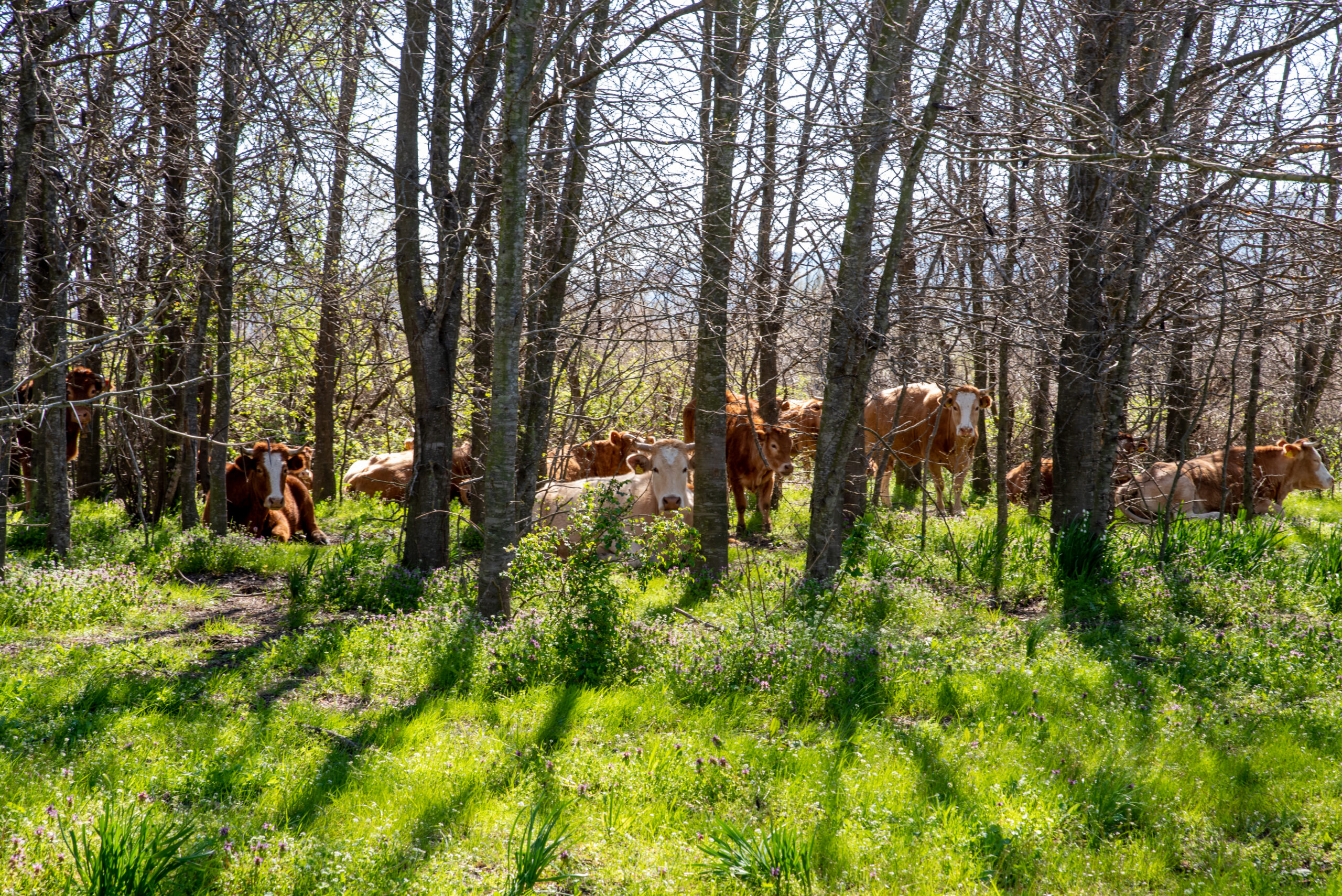
Silvopasture is gaining increasing attention across Europe as farmers, researchers, and policymakers search for more sustainable ways to produce food while protecting natural ecosystems. The livestock sector plays a crucial role in Europe’s economy and food systems, but it also faces major environmental and economic challenges linked to greenhouse gas emissions, biodiversity loss, soil degradation, and climate change.
At the same time, European farmers are increasingly exposed to droughts, heatwaves, rising production costs, and pressure on natural resources. These challenges are driving interest in regenerative farming models capable of improving resilience while maintaining productive agricultural systems.
One of the approaches attracting growing attention is silvopasture — a system that integrates trees, pasture, and livestock into the same farming environment. But can trees really improve livestock farming?
Why Europe is rethinking livestock systems
The future of livestock farming has become a central topic within European sustainability discussions. According to several European organisations and initiatives, the sector must evolve towards systems that are not only productive, but also environmentally sustainable, economically viable, and socially resilient.
Traditional intensive livestock systems can place significant pressure on ecosystems through greenhouse gas emissions, high water consumption, soil degradation, and dependence on imported feed resources. In recent years, European institutions and agricultural organisations have increasingly highlighted the importance of transitioning towards farming models that combine productivity with ecosystem restoration and climate adaptation.
According to the European Environment Agency, extensive livestock systems can play an important role in supporting biodiversity and maintaining valuable rural landscapes across Europe. These systems often contribute to habitat preservation, nutrient cycling, and ecosystem balance while helping sustain rural communities.
Similarly, recent European initiatives such as Farm LIFE have demonstrated how integrating trees into agricultural systems can improve climate resilience, support carbon sequestration, and create more multifunctional farming environments. Meanwhile, agricultural organisations like Farm Europe have stressed the importance of building a livestock sector that remains both sustainable and economically profitable in the long term.
Within this context, silvopasture systems are increasingly being revisited as part of Europe’s transition towards regenerative agriculture and circular farming systems.
What is silvopasture and how does it work?
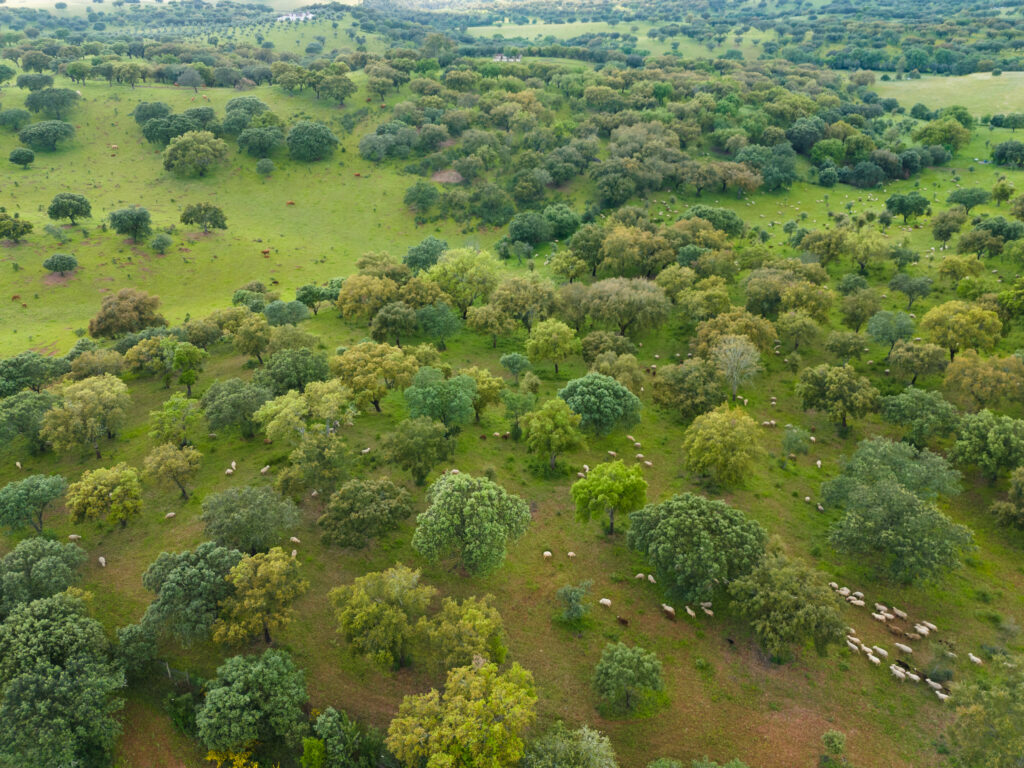
Silvopasture is a type of agroforestry system in which trees, pasture, and grazing livestock coexist within the same productive environment. Instead of separating forestry and livestock production into different areas, silvopasture combines both activities in a way that allows them to support one another.
Although the concept may sound innovative, many forms of silvopasture have existed in Europe for centuries. Today, however, these systems are being reconsidered through the lens of sustainability, climate adaptation, biodiversity restoration, and regenerative farming.
In silvopasture systems, trees provide much more than visual landscape diversity. Their roots help stabilise soil structure, improve water retention, and reduce erosion. Trees also contribute organic matter to the soil through leaf litter and root activity, helping maintain soil fertility over time.
At the same time, pasture vegetation supports livestock grazing while contributing to nutrient cycling within the ecosystem. Animals naturally return nutrients to the soil through manure, creating a more balanced and circular agricultural system.
Rather than functioning as separate components, trees, soil, vegetation, and livestock become interconnected parts of the same ecosystem.
How silvopasture can improve livestock farming
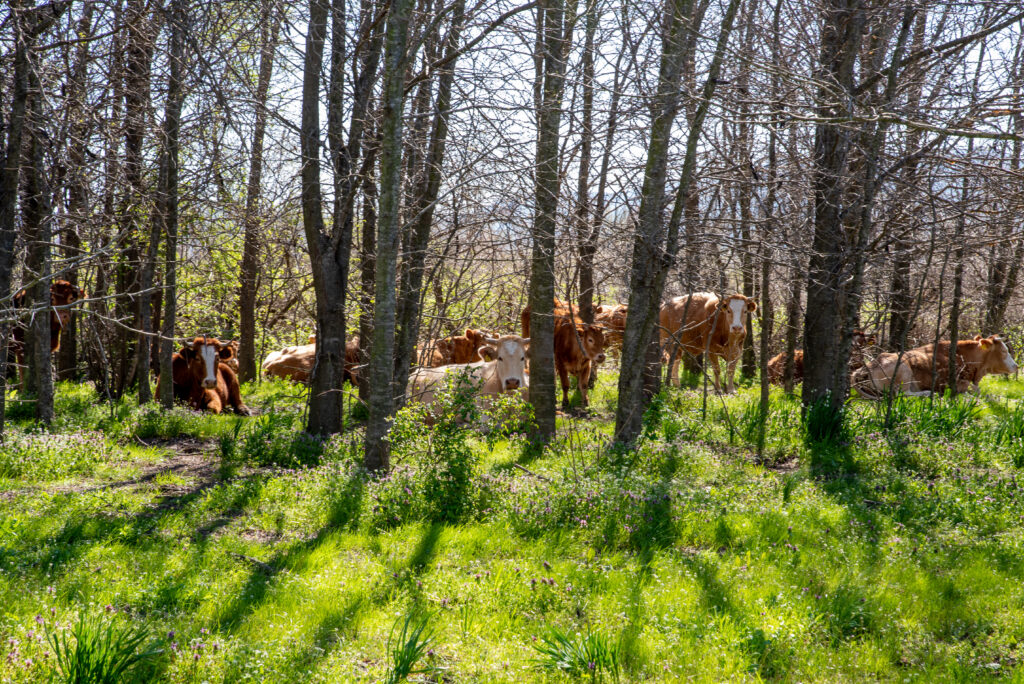
One of the most immediate benefits of silvopasture systems is the improvement of animal welfare. Trees provide natural shade and shelter, helping animals cope with heat stress during increasingly frequent extreme weather events. This can positively influence grazing behaviour, reduce physiological stress, and contribute to better overall animal performance.
Silvopasture systems can also support biodiversity by creating habitats for birds, insects, pollinators, and soil microorganisms. The presence of trees and mixed vegetation contributes to more diverse ecological environments compared to highly simplified agricultural landscapes.
Another important advantage is soil regeneration. Tree roots help improve soil structure and increase water infiltration, which becomes especially important during periods of drought. Over time, these systems can contribute to healthier and more resilient soils capable of supporting agricultural productivity under changing climate conditions.
Carbon sequestration is another key aspect frequently associated with silvopasture systems. Trees absorb and store carbon dioxide from the atmosphere while also contributing to the accumulation of soil organic matter. As a result, silvopasture is increasingly being explored as a nature-based solution that can support climate mitigation efforts within agriculture.
Silvopasture may also help improve nutrient cycling and resource efficiency. Nutrients circulate more effectively between vegetation, animals, and soil, reducing nutrient losses and supporting more balanced ecosystem functioning.
In some cases, these systems may also indirectly contribute to reducing methane emissions by improving grazing conditions, feed quality, and overall animal health. While silvopasture alone is not a complete solution to livestock emissions, it can become part of a broader regenerative farming strategy aimed at reducing the environmental footprint of livestock production.
Why silvopasture matters for Europe
Across Europe, climate change is intensifying pressure on agricultural systems. Heatwaves, biodiversity decline, water scarcity, and land degradation are becoming increasingly visible challenges for farmers and rural communities.
For this reason, silvopasture and agroforestry systems are gaining importance within broader European discussions surrounding regenerative agriculture, climate-smart farming, and sustainable food systems. These approaches are increasingly viewed as ways to combine food production with ecosystem restoration rather than treating both objectives as incompatible.
Silvopasture systems may also strengthen the long-term resilience and economic stability of farms by diversifying agricultural production and reducing vulnerability to climate-related risks. Trees can provide additional ecosystem services while improving landscape functionality and environmental performance.
As Europe continues advancing towards sustainability goals linked to biodiversity, climate action, and circular bioeconomy principles, regenerative livestock systems are expected to play an increasingly important role in the future of agriculture.
The role of NUTRIFEEDS
Within NUTRIFEEDS, these concepts are explored through the Regenerative Farm & Silvopasture Pilot, which brings the project’s innovations directly into real farming environments.
This pilot combines regenerative feed formulations developed through insect upcycling and targeted fermentation with silvopasture systems where livestock graze under trees and mixed vegetation. The objective is to evaluate how these integrated approaches can improve animal performance while simultaneously supporting biodiversity, soil health, carbon sequestration, and ecosystem resilience.
The pilot also investigates the social and economic viability of regenerative farming systems, helping assess whether these approaches can realistically be adopted and scaled across Europe.
By connecting innovative feed strategies with regenerative land management practices, NUTRIFEEDS aims to demonstrate that livestock farming can become more circular, resilient, and environmentally responsible without compromising productivity.
Looking ahead
As Europe searches for more sustainable agricultural models, silvopasture is emerging as a promising example of how productivity and ecosystem restoration can work together rather than in opposition.
Integrating trees into livestock farming is not simply about changing agricultural landscapes — it is about redesigning farming systems to become more resilient, circular, and better adapted to future environmental challenges.
Through its Innovation Pilots, NUTRIFEEDS contributes to this transition by exploring how regenerative feed strategies and nature-based farming approaches can support the future of sustainable livestock production in Europe.